
Custom Foam Oakland, CA
Minimum Order Quantity (MOQ): Bulk Orders Only, No Small Quantities!
🚚 Save BIG on Truckload orders!
If you’re shipping out of Oakland and you keep seeing the same ugly pattern—freight arrives “mostly fine,” but the product inside is dinged, stressed, or cosmetically wrecked—you’re dealing with vibration doing slow damage over time, especially when shipments are moving through multiple handoffs where your cartons live on conveyors, trailers, and pallets that never stop humming.
Get a fast quote on custom foam
Oakland shipping reality: vibration is constant, and it punishes slack space
When freight moves through busy distribution lanes, the damage isn’t always a dramatic drop. A lot of times it’s the constant shaking, sliding, and micro-movement that happens when your product has room to move inside the carton.
Vibration damage shows up as:
-
scuffs that look like rubbing
-
loosened fasteners
-
“mysterious” cracks near stress points
-
components shifting out of alignment
-
accessories chipping the main item because they rattled around for hours
So this page is built around:
-
Dominant angle: Vibration-sensitive protection
-
Dominant shipping context: LTL
-
Dominant failure mode: Vibration
-
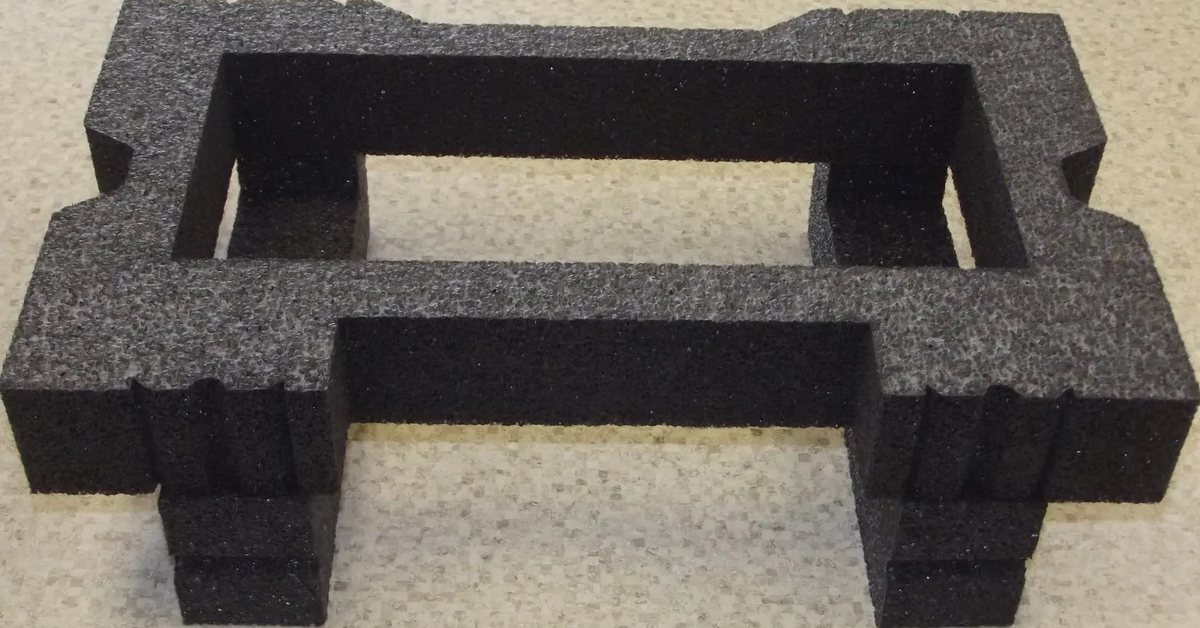
Foam formats emphasized: Multi-layer foam kits, foam dividers/partitions, foam liners
This is about controlling micro-movement so your products stop getting slowly beaten up in transit.
Why vibration damage is the most expensive kind (because it looks like quality problems)
Here’s what kills you: vibration damage makes customers think you have QC issues.
A customer opens the box and sees:
-
wear marks
-
a loosened part
-
a component out of place
-
a small crack that shouldn’t exist
They don’t assume “freight vibration.” They assume:
“This company builds junk.”
Then you’re not just replacing product—you’re defending your brand.
Custom foam prevents that by controlling movement so vibration can’t translate into friction and fatigue.
Tell us what you’re protecting in Oakland, CA.
Send your product dimensions, weight and quantity. We’ll recommend the right custom foam and price it for bulk.
The Oakland mistake: packing for impact, ignoring vibration
Most teams pack for impact:
-
add cushioning
-
add void fill
-
add more wrap
But vibration isn’t solved by “cushion.” It’s solved by restraint.
If the product can wiggle, it will wiggle.
And if it wiggles for hours, it will wear.
So Oakland operations need foam that:
-
locks product position
-
prevents accessory collisions
-
creates consistent internal surfaces
-
stays stable even when cartons are shaken nonstop
The foam formats that win for vibration control
We’re rotating formats and keeping it operational.
1) Multi-layer foam kits (the “seatbelt” system)
Multi-layer kits create a base, support layer, and top restraint—so the product can’t walk around during long vibration exposure.
This is ideal when:
-
the product has components that can loosen
-
you need consistent positioning
-
vibration causes internal rubbing or fatigue
2) Foam dividers / partitions (stop internal collision damage)
If you ship multiple items or accessories in the same carton, vibration turns that carton into a shaker bottle.
Partitions keep parts separated so they can’t grind or slam into each other repeatedly.
3) Foam liners (reduce rubbing against carton walls)
Liners provide a smooth, protective surface and consistent spacing. If your damage photos show scuffs and rub marks, liners often remove the root cause: carton contact under vibration.
Foam inserts can be mentioned once as an option, but we’re not leading with precision cutouts. We’re leading with vibration control and repeatable protection.
Two Oakland micro-scenarios that happen more than people admit
Micro-scenario #1: “It arrives with scuffs and loose parts—even though nobody dropped it”
Customer sends a photo:
-
finish looks rubbed
-
a small fastener is loose
-
a part that was tight is now rattling
No crushed carton. No obvious impact.
That’s vibration + movement. The product slowly worked against its packaging for the entire trip.
Multi-layer foam kits and liners stop that because the product doesn’t move enough to create friction or loosen parts.
Micro-scenario #2: “Accessories keep damaging the main unit”
You ship a main product and include accessories in the same carton:
-
brackets
-
hardware bags
-
small components
Even if you wrap them, vibration can cause them to migrate and then grind into the main unit or chip corners.
Then you get the complaint:
“It’s scratched and the accessories were bouncing around.”
Partitions solve that because accessories get their own lane. No contact, no damage.
Shipping volume? Ask about truckload pricing.
Bulk and repeat-order foam programs lower your per-unit cost and keep every packout consistent.
The buyer mistake Oakland shippers make (and it keeps the damage ‘random’)
The mistake: thinking vibration damage is “unavoidable.”
So they accept it, budget for it, and keep shipping.
That’s a slow bleed.
Vibration damage is avoidable when the packaging:
-
eliminates slack space
-
restrains product movement
-
separates components
-
prevents carton-wall rubbing
If your packaging allows wiggle room, vibration will exploit it.
“Get priced fast” — short paragraph with bullets (built for vibration problems)
To get a fast quote for Oakland custom foam designed for vibration-sensitive protection, send:
-
Product dimensions + weight
-
What vibration damage looks like (scuffs, rub marks, loosened parts, fatigue cracks, alignment issues)
-
Whether accessories/parts ship in the same carton (yes/no)
-
Shipping method (LTL lanes, palletized cartons, mixed freight, etc.)
-
Carton sizes used today and current internal packaging method
-
Monthly volume range (bulk production pricing depends on this)
That gives us enough to recommend liners vs partitions vs a multi-layer kit and price it quickly.
Call or text our packaging team
We’ll help you choose the right foam format for your products and shipping method.
How to know if you need liners, partitions, or a multi-layer kit
Use this simple rule set:

-
If the issue is scuffs/rubbing: liners
-
If accessories are causing damage: partitions
-
If parts loosen or product shifts under long vibration: multi-layer kits
A lot of Oakland shippers end up using a combination because vibration creates multiple small failure points.
What changes when vibration damage stops
When the foam system is right, you’ll notice:
-
fewer “random” issues that are hard to claim
-
fewer returns labeled “defective”
-
fewer customer doubts about quality
-
fewer reships that eat margin
-
fewer internal packaging improvisations
And your warehouse gets faster because the method is repeatable—no guessing, no overpacking, no “add more just in case.”
Oakland bottom line
If your products are getting quietly worn down in transit—scuffed surfaces, loosened components, mystery stress cracks—vibration is the culprit, and slack space is the gateway.
Custom foam built for vibration control—multi-layer kits, partitions, and liners—locks product down so it arrives looking new, functioning correctly, and not like it went through a freight blender.