
Source item #: CPP-70USSL
1. Cleaner Filling Operations
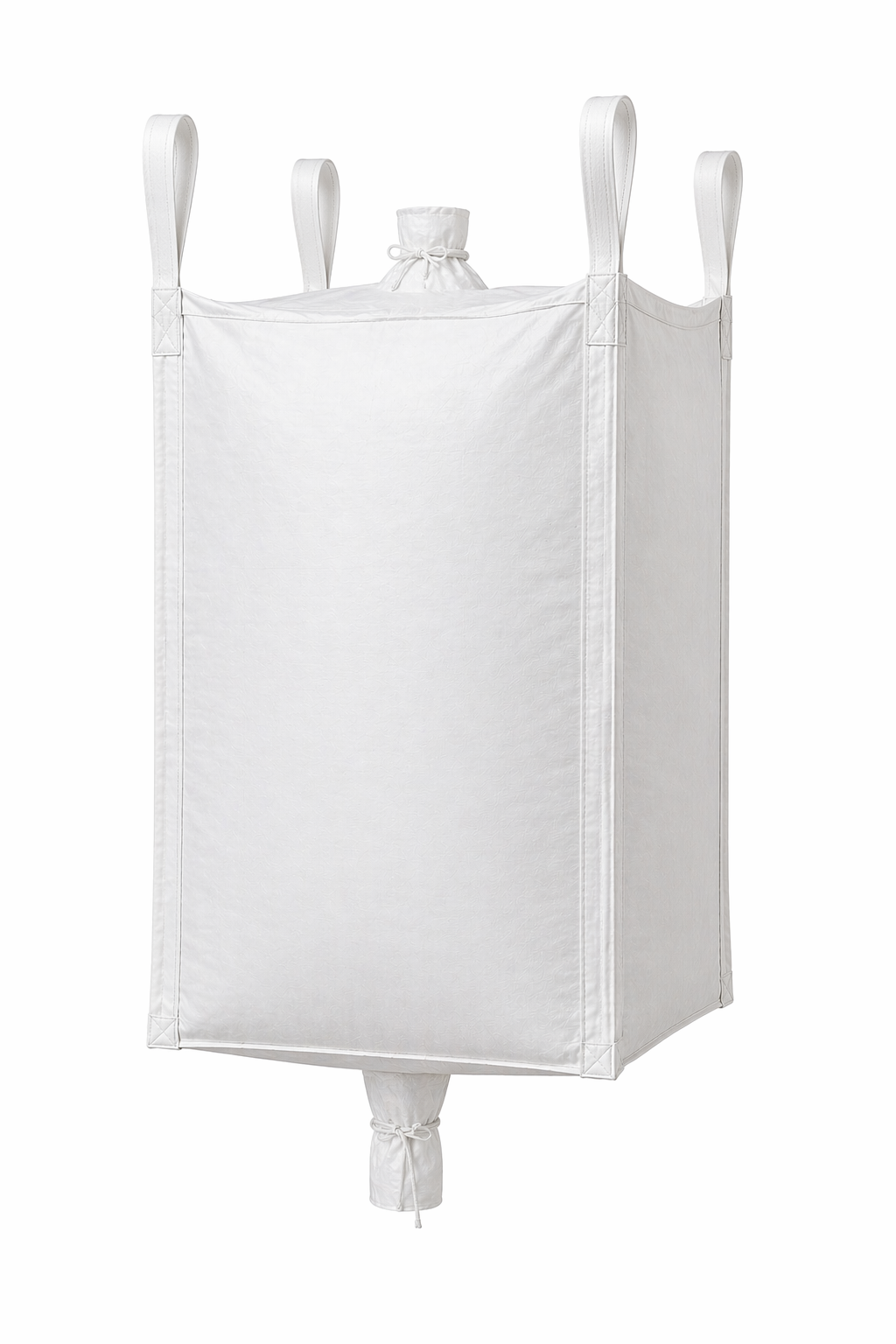
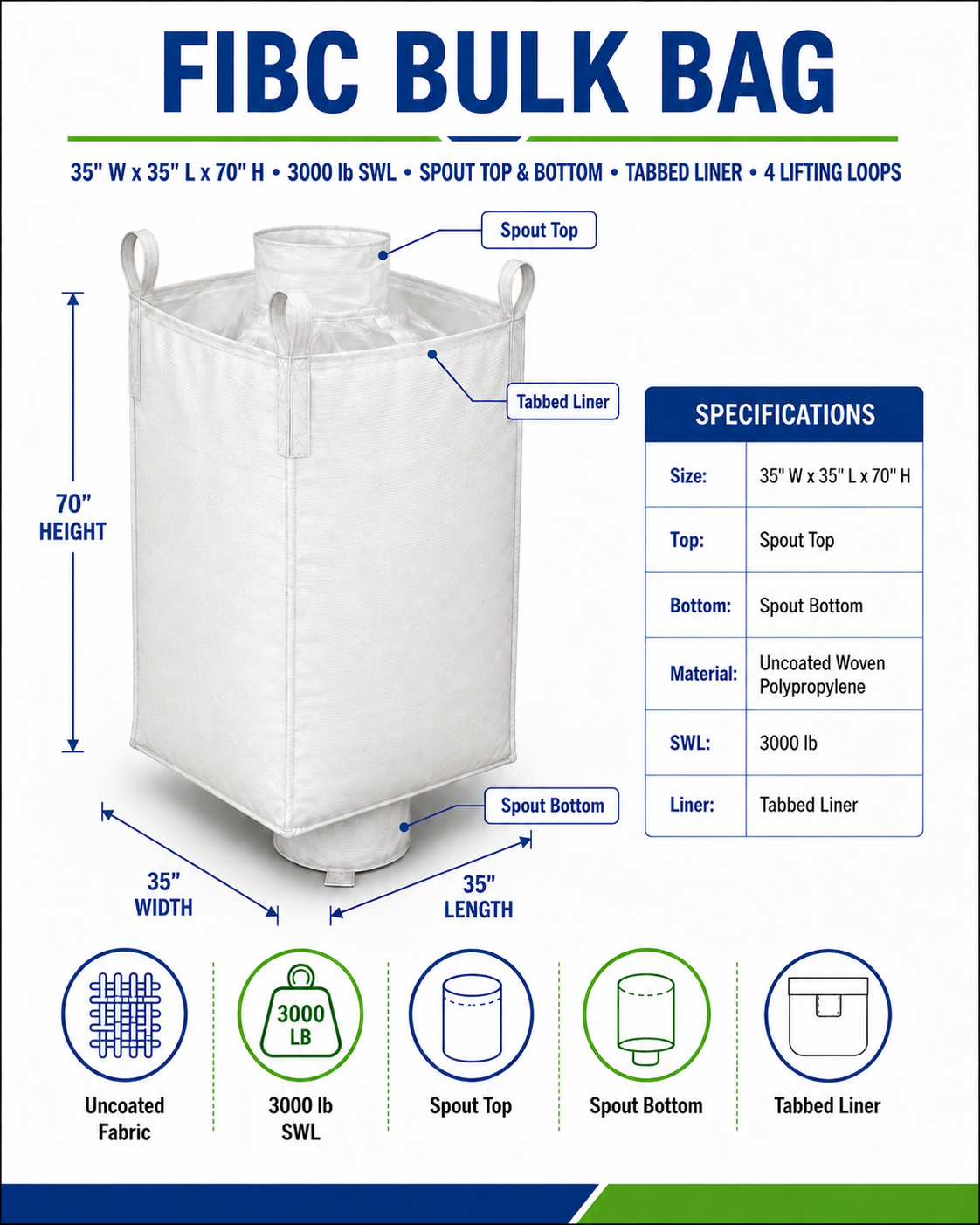
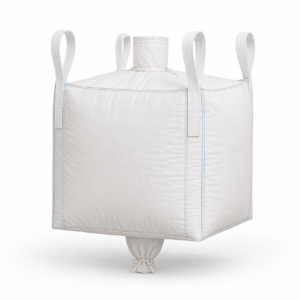
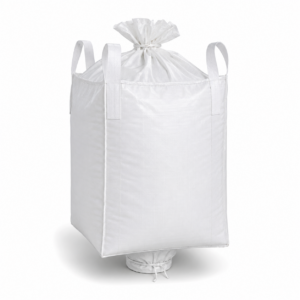
The top fill spout allows for controlled loading, helping reduce dust, improve accuracy, and support cleaner material handling.
2. Controlled Product Discharge
The bottom discharge spout provides efficient unloading into hoppers, mixers, and processing equipment while minimizing product waste.
3. Added Product Protection
An integrated tabbed liner helps protect materials from moisture and contamination while remaining securely positioned during filling and discharge.
4. Ideal for Sensitive Materials
Commonly used for powders, chemicals, minerals, food ingredients, starches, and other applications where product integrity is important.
5. Designed for Reliable Performance
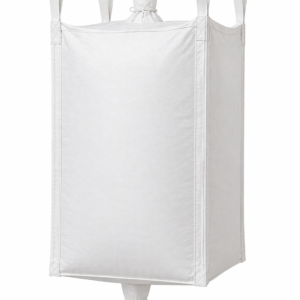
The durable U-Panel construction helps maintain bag stability during filling, storage, transportation, and repeated handling.
| Weight | 1000 lbs |
|---|---|
| Dimensions | 35 × 35 × 70 in |
| Size | 35x35x70 |
| Panel Type | U-Panel |
| LBS | 3000 lbs |
| Top/Bottom | Spout Top, Spout Bottom |
| Fabric | Uncoated |
1. What is this bulk bag commonly used for?
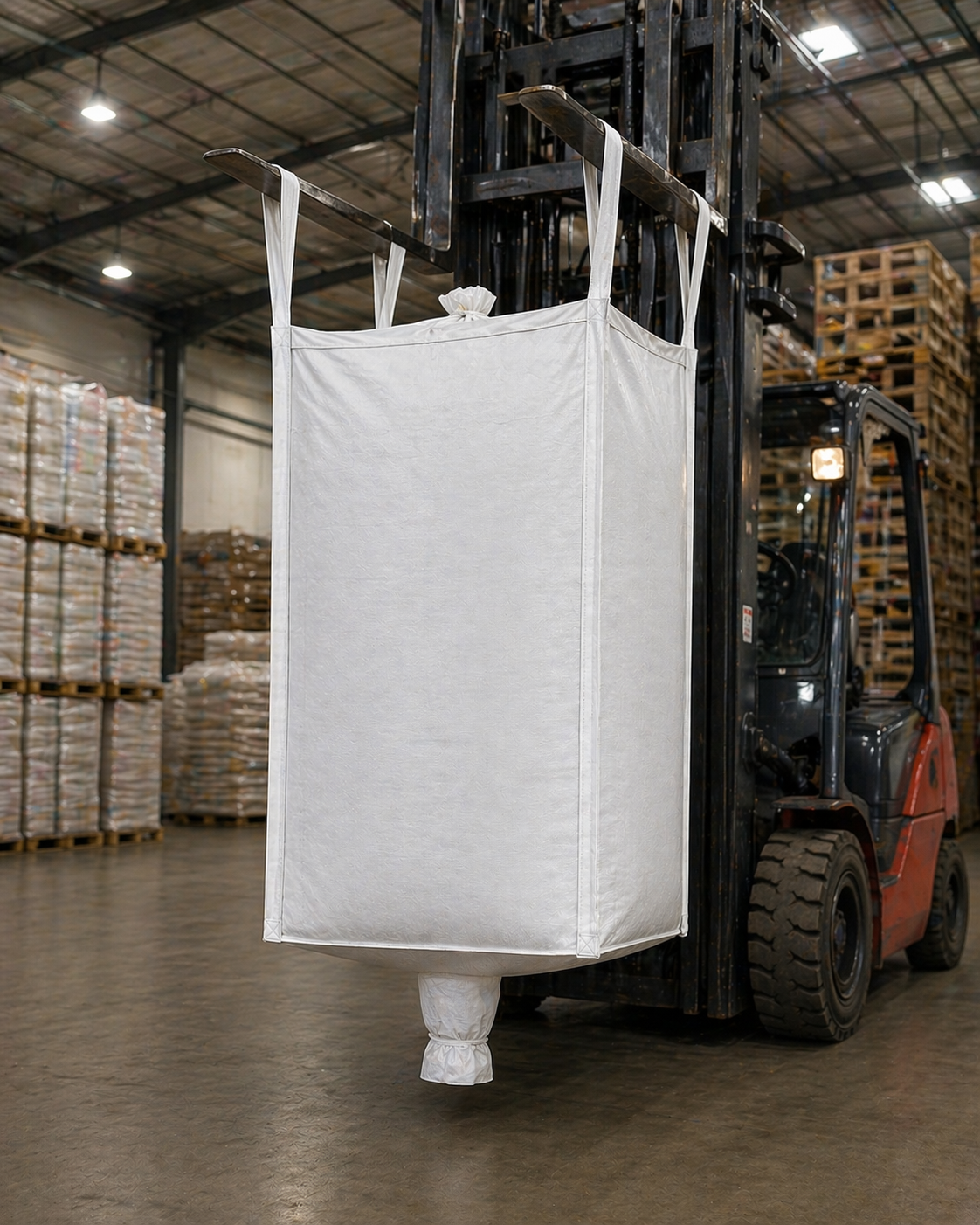
This FIBC bulk bag is commonly used for storing and transporting dry bulk materials such as powders, granules, resins, ingredients, chemicals, minerals, and other flowable products.
2. How much weight can this bulk bag safely hold?
This bag has a 3,000 lb safe working load, meaning it is designed to safely hold up to 3,000 lbs when filled, lifted, and handled properly.
3. What is the benefit of the spout top and spout bottom?
The spout top helps provide controlled filling with less product loss, while the spout bottom allows for cleaner, more controlled discharge when emptying the bag.
4. What does U-panel construction mean?
A U-panel bulk bag is made with one large panel forming the bottom and two sides of the bag, with two additional side panels sewn in. This design provides strong support for bulk handling and transport.
5. Why is a tabbed liner useful?
A tabbed liner helps protect the product inside the bag by adding an extra layer of containment. The tabs help keep the liner in place during filling and discharge, which can reduce shifting, bunching, and product contamination.

Download our free guide to learn everything you need to know before buying bulk bags.
Download PDF Guide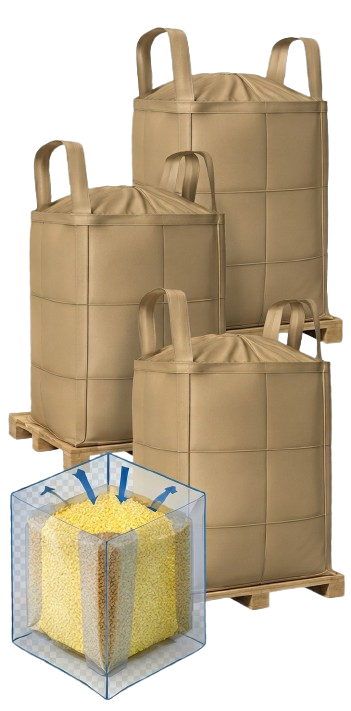




Exclusive 10% off packaging, material handling & logistics.

Smart-refill rules so you never run low, with priority shipping.

Early access to flash sales & volume purchase offers.

Fast-track help from a dedicated success manager.